Rolex Datejust 36 vs 41 is a size-choice question before it is a styling question. A smaller nominal diameter usually creates a different visual relationship between dial, case and wrist, but the number alone cannot tell you whether a particular replica will fit comfortably. Case shape, thickness, bracelet adjustment and the way the watch rests all contribute.
This guide focuses on choosing between title-stated sizes. It does not repeat our separate discussion of dial colours and bracelet appearance, and it does not assign original Rolex measurements or movement specifications to replica listings. Two current product records show what can be compared honestly and what still needs a direct question.
What the five-millimetre difference does and does not tell you
As original-brand background, Rolex's Datejust model catalogue distinguishes Datejust 36 and Datejust 41 among its sizes. That establishes the manufacturer's naming context. It does not establish that every similarly named replica has been measured or reproduces the original case dimensions precisely.
The numerical difference between the two labels is five millimetres. It does not follow that the complete watch is five millimetres longer across the wrist, that the dial opening grows by the same amount, or that one bracelet is a fixed amount wider. Those are different measurements. They need their own evidence rather than a calculation from the product name.
Visually, the same nominal size can also feel different with a broad bezel, an open dial or a bracelet that changes the transition to the wrist. This is why a straight-on photograph is a starting point rather than a complete fit assessment. Side and wrist-level views can answer different questions, provided they concern the actual configuration being considered.
Avoid gender rules or a rigid wrist-circumference chart. Some people prefer a quieter proportion; others want the watch to occupy more visual space. Neither preference makes one size inherently more appropriate for a particular person. A useful guide helps you establish fit and preference rather than converting a catalogue label into a dress code.
Two title-stated sizes in the current catalogue
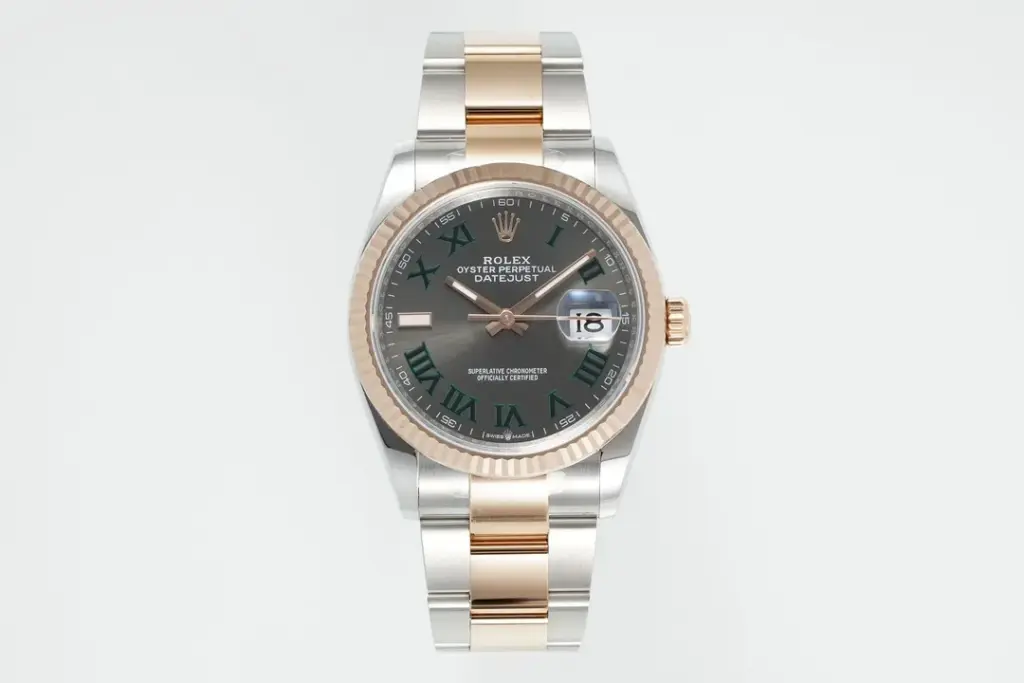
The Datejust collection contains the two examples below. Their sizes are explicitly stated in their current titles. We have not independently measured the watches, and the table does not add missing thickness, span or bracelet dimensions.
| Checked record | 36mm candidate | 41mm candidate |
|---|---|---|
| SKU | 35-719723 | 35-249663 |
| Size text in product title | 36mm | 41mm |
| Assigned collection | Rolex Datejust | Rolex Datejust |
| Factory product tag | VS Factory | None recorded |
| Measured thickness supplied for this comparison | Not established | Not established |
| Universal wrist-fit conclusion | Not available from the title | Not available from the title |
The 36mm listing includes two-tone stainless-steel-and-rose-gold wording. This identifies what the record says; it is not a test of precious-metal content. The 41mm listing includes Green and Fluted Bezel wording. Their different appearance means they are not a controlled pair in which only size changes.
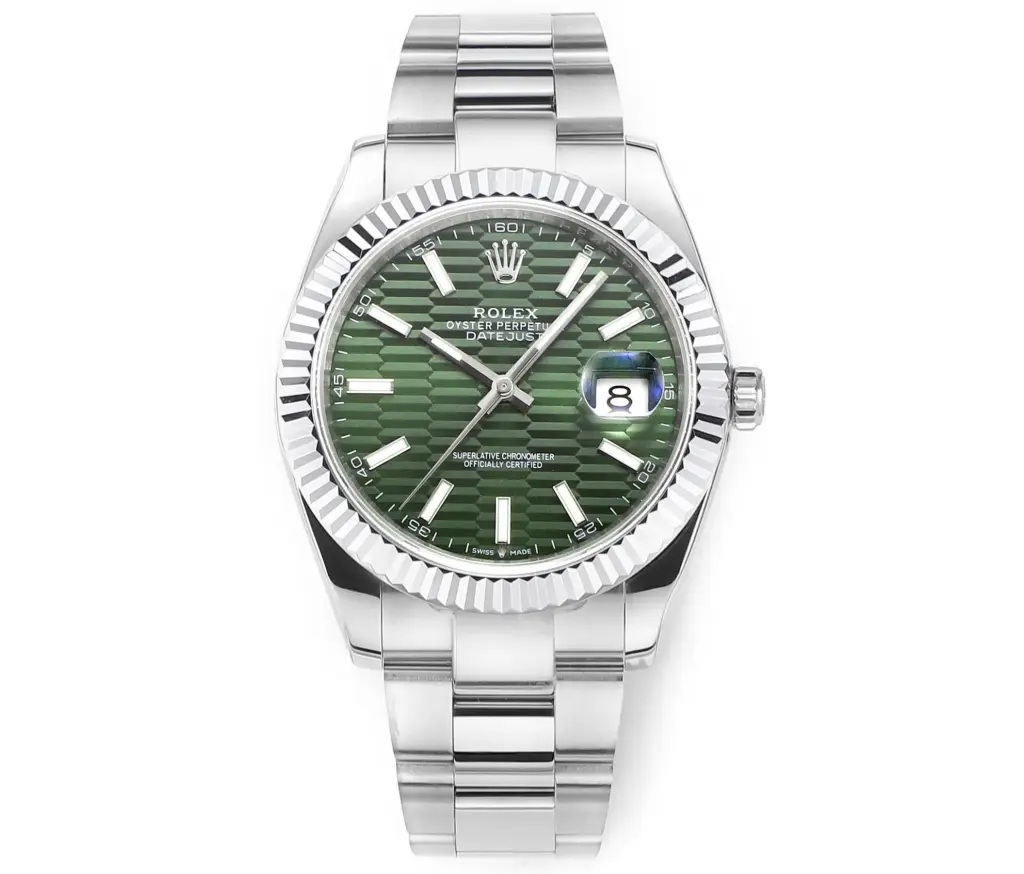
Keep that limitation in mind when comparing the pictures. If you prefer one example, ask whether you are responding to the nominal size, the dial treatment or the case finish. It is easy to attribute a styling preference to size when several visible details change at once.
The 36mm candidate also has a VS Factory tag while the selected 41mm record does not. Do not interpret that empty field as another verified factory, and do not use it to infer a movement difference. The VS Factory archive is a browsing route for assigned records, not a specification for every Datejust on the site.
A practical fit check without a universal wrist chart
Begin with a watch you already wear comfortably, if you have one. Note what you like about the fit: whether it stays centred, clears sleeves and allows comfortable adjustment. If you know its measured dimensions, use them as personal context. Do not assume that matching one number will reproduce the same fit in a different case shape.
Next, ask about the actual shortlisted SKU. Useful questions concern case diameter as measured, overall span, thickness and bracelet adjustment. If a seller supplies a measurement, establish which dimension it refers to and whether it includes protruding features. A number without a clear measurement definition can create a false sense of precision.
Compare photographs with similar scale and perspective. A close wrist photograph taken with a wide-angle lens can exaggerate how much space the watch occupies. A distant photograph may make the same object look restrained. Where possible, seek a neutral straight-on view and a side view rather than comparing two unrelated promotional crops.
Treat paper circles or drawn outlines only as rough visual exercises. They may help you recognise whether you prefer a smaller or larger dial impression, but they do not reproduce thickness, lugs, bracelet articulation or weight. They should not replace measurements or be presented as proof that a watch will fit.
Finally, consider adjustment over a normal day. A comfortable relationship between case and bracelet matters more than achieving a particular number on a size chart. If adjustment details are missing from the record, ask. Neither of the titles in our table establishes the full fitting range or the construction of its clasp.
Make a size decision before a styling decision
First decide whether your priority is a relatively restrained presence or a larger visual statement. Then look for the information that can confirm fit. Once you have a size direction, compare the appearance choices within it. That order reduces the chance of selecting a visually appealing reference whose proportions are not what you wanted.
You can keep the broader Rolex catalogue open for context, but avoid expanding the shortlist until you can explain why each candidate is there. Two well-identified Datejust records with clear questions are more useful than many saved images without SKUs.
This article's scope is deliberately different from a dial-and-bracelet guide. Colour and link patterns can influence perceived size, but the central decision here is how to assess dimensions and fit. Keeping those intentions separate helps you use both guides without reading the same broad comparison twice.
FAQ
Is 36mm automatically the right choice for a smaller wrist?
No. It may suit your preference, but the label alone does not establish full fit. Ask about the case's overall dimensions and adjustment, then compare them with your own experience of comfortable watches.
Is 41mm harder to wear with a sleeve?
The title-stated diameter cannot answer that by itself. Thickness, profile and how the watch sits matter. The inspected 41mm record does not establish a measured sleeve-clearance result.
Do the examples differ only in size?
No. Their title descriptions, photographs and factory-tag information differ. They illustrate two size labels, not a controlled technical test between otherwise identical watches.
Can I infer movement or power reserve from the size?
No. Neither size label establishes those details for a replica. Ask about the specific record rather than adopting specifications from the original brand or a different listing.
Related reading
After settling on a size direction, use the existing Datejust dial and bracelet guide for styling choices. Read what a factory tag can establish before assigning extra specifications to a size candidate. The Luminor and Submersible comparison provides a different example of why family names and nominal dimensions need reference-specific context.