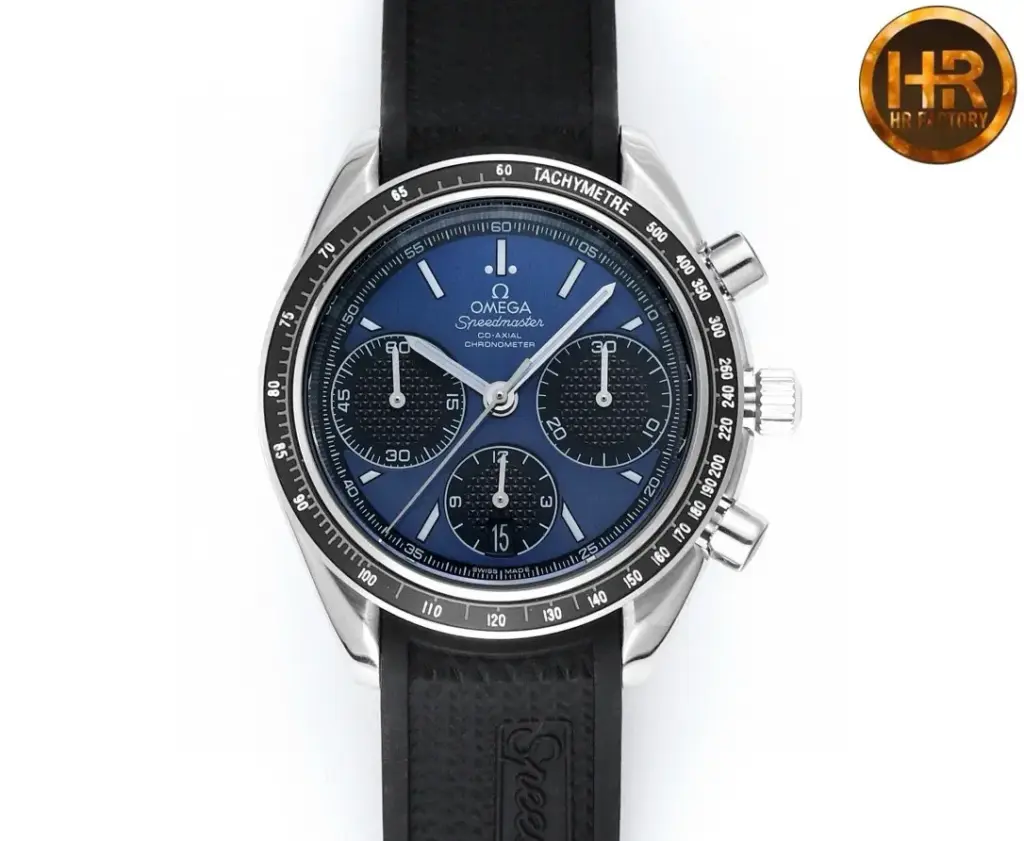
An Omega Speedmaster guide should help you understand the dial before asking you to trust a specification. A chronograph-style face contains several kinds of information, and a photograph cannot explain all of them. The useful first step is to distinguish ordinary time display, running indicators and elapsed-time indications, then establish what the actual listing says about their operation.
This article deals with that reading process. It does not assign the specifications of an original Omega watch to a replica carrying similar wording. The current catalogue examples below illustrate the limits of title information as well as the visual choices available.
Read three layers of information
Begin with the main hour markers and hands. Can you quickly locate the ordinary time without being distracted by secondary displays? A strong contrast in a studio photograph is helpful, but compare another angle where reflections change. The practical question is how clearly the display reads to you, not whether the dial has the largest number of printed details.
Think of a chronograph as a stopwatch alongside ordinary timekeeping. A running-seconds indication belongs to the clock; an elapsed-time indication belongs to a measured interval. They can therefore show different readings without contradicting each other. This is the reason to distinguish the small-seconds display from an elapsed-seconds hand when reading a documented layout. The distinction explains the terminology, but it does not identify where those functions sit, or whether they operate, on an unspecified replica mechanism.
Next, identify the secondary displays as shapes and positions before assigning them functions. Note how many there are, which have hands, and whether their markings can be read in the available images. It is reasonable to describe what is visible. It is not reasonable to label every subsidiary dial with a function that the product information has not confirmed.
Finally, look at any scale around the dial or bezel. In general chronograph use, a tachymeter relates elapsed time over a known unit of distance to an average rate. Its markings do not by themselves establish that a replica's timing mechanism operates as expected. Treat a scale as part of the layout until the relevant functions have been explained for that watch.
For genuine-brand background, Omega's manual for one Moonwatch reference distinguishes ordinary time, small seconds, chronograph and tachymeter functions. That is a reference-specific original-brand document. Its movement, measurements and operating procedure are not transferred to the replica examples in this article.
Compare the relationship between the three layers rather than enlarging only one subdial. A dial may look clear in a close crop but busy when the complete watch is shown. Conversely, a layout that first appears complex can have a clear hierarchy once the ordinary time display becomes familiar. Your preference need not be a verdict about technical quality.
What a chronograph question should establish
Ask which hand or display shows ordinary running seconds, which records elapsed time, and what the pushers actually control on the specific SKU. If the answer is incomplete, keep that item in your uncertainty column rather than filling in the missing behaviour from a famous reference.
A useful explanation should identify the watch concerned. A demonstration of another product, even one with a similar dial, cannot establish that your shortlisted example has the same arrangement. If a demonstration is available, ask whether it concerns that SKU or a general example. This is a question to ask, not a claim that every listing includes a test video.
Do not experiment with unknown controls because a generic guide describes a familiar sequence. Crown and pusher operation depends on the fitted mechanism. Obtain the appropriate instructions before using a complication. A design guide can help you formulate questions; it cannot make an unspecified replica movement interchangeable with a manufacturer's documented original.
Also separate appearance from your intended use. You may simply enjoy the dial architecture, or you may need an elapsed-time function for a particular routine. Those are different requirements. Be clear about which matters before comparing claims, otherwise a good-looking photograph may appear to answer a functional question it cannot address.
The Omega catalogue supplies the broader brand route, while the Speedmaster selection keeps this comparison within one collection. The collection name narrows the design family. It does not establish a universal movement or a shared set of working complications across all entries.
Two catalogue entries: what is and is not recorded
The two records inspected here both contain the identifier 326.32.40.50.06.001 in their titles and both carry the VS Factory product tag. Their title descriptions differ. That is enough to identify useful comparison candidates, but not enough to certify them as mechanically identical watches.
| Catalogue item | Wording present in the title | What is not established by that wording |
|---|---|---|
| SKU 35-250388 | 326.32.40.50.06.001; Blue Rubber | Measured size, material testing or chronograph operation |
| SKU 35-250391 | 326.32.40.50.06.001; Silver Chronograph | Movement identity, accuracy or power reserve |
Open the Blue Rubber record and the Silver Chronograph record as separate products. In particular, Silver is reproduced as title wording here: it is not a claim that an independently identified component has been chemically or visually verified as silver. Avoid extending an ambiguous adjective into several unwritten specifications.
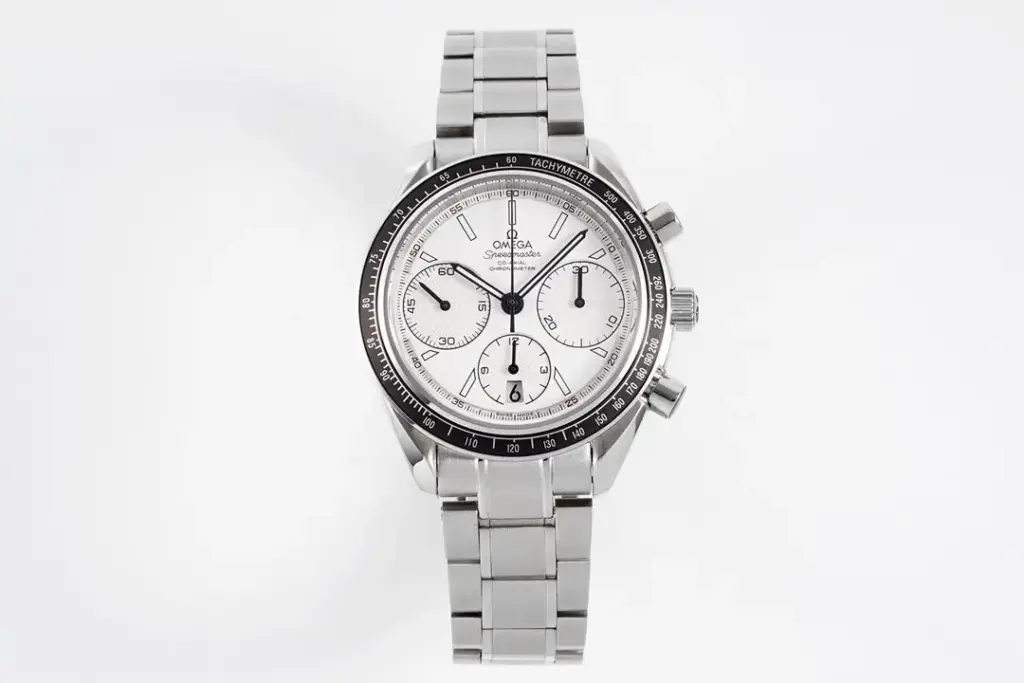
For each entry, first compare the complete gallery. Note which views exist and whether they answer your questions about the dial, case side and attachment of the bracelet or strap. A photograph that is absent is simply absent; it should not be described as evidence of a particular feature.
Then write a short list of the information you still need. If thickness, movement identity or a function is not clearly established in the current record, ask about it directly. Do not infer dimensions by decoding a familiar reference string or import reserve figures from an original Omega document. The same restraint applies to water resistance and accuracy claims.
The VS Factory group is a valid additional route for these two entries because their tag assignments were checked. It remains a catalogue grouping, not a guarantee that every tagged Speedmaster is identical. Keep the product URL and SKU attached to every comparison note.
FAQ
Does every subdial work like the corresponding original Omega?
The visible layout cannot establish that. Ask which indicators operate and how on the particular replica listing. An original-brand manual describes its own documented reference, not every watch sharing a similar face.
Does a chronograph-style dial prove accurate timing?
No. Appearance does not establish measured timing performance. Distinguish an elapsed-time function from a verified accuracy result, and request record-specific evidence if the latter matters to you.
Is a reference-like number a complete specification?
No. It is useful identifying text, but the inspected catalogue titles do not independently establish case dimensions, internal components or tested performance from that string alone.
Should I choose by colour or by function first?
Choose by the requirement that matters most. If elapsed-time operation is essential, clarify it before comparing colours. If you are choosing primarily for appearance, still check that the listing and images identify the same configuration.
Does a diving-style detail establish usable water resistance?
No. Neither collection language nor visible markings establish the condition or testing of an individual replica watch. Keep water exposure separate from the visual comparison in this guide.
Related reading
Our VS Factory guide explains the distinction between a label and a specification. For another Omega design direction, read the existing Seamaster dial and bezel comparison. Use the listing checklist to record the questions that remain unanswered for each candidate.