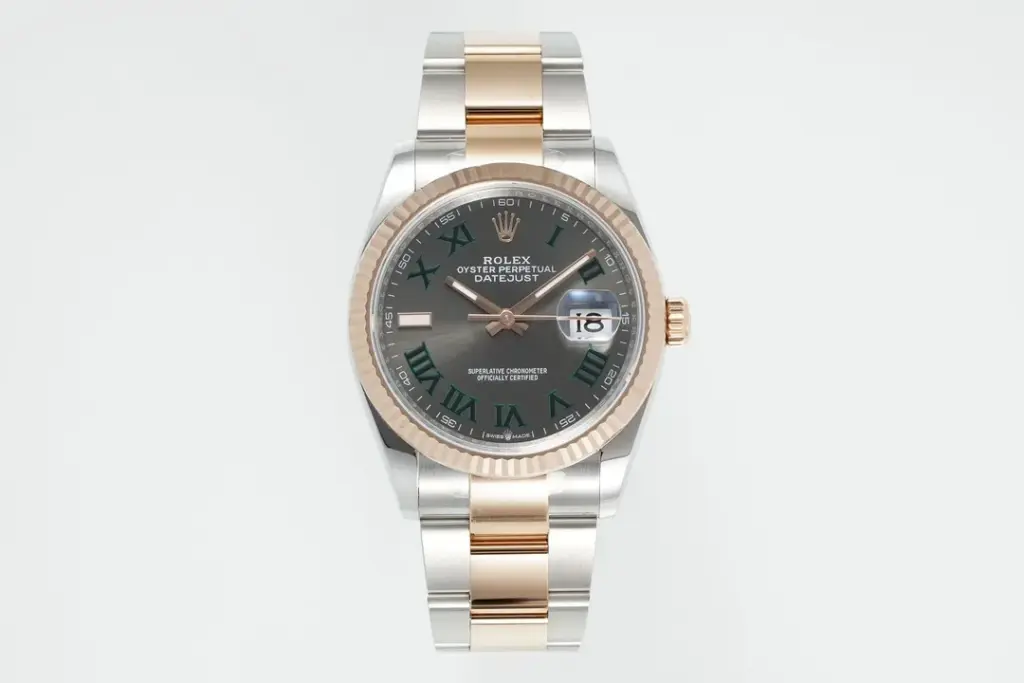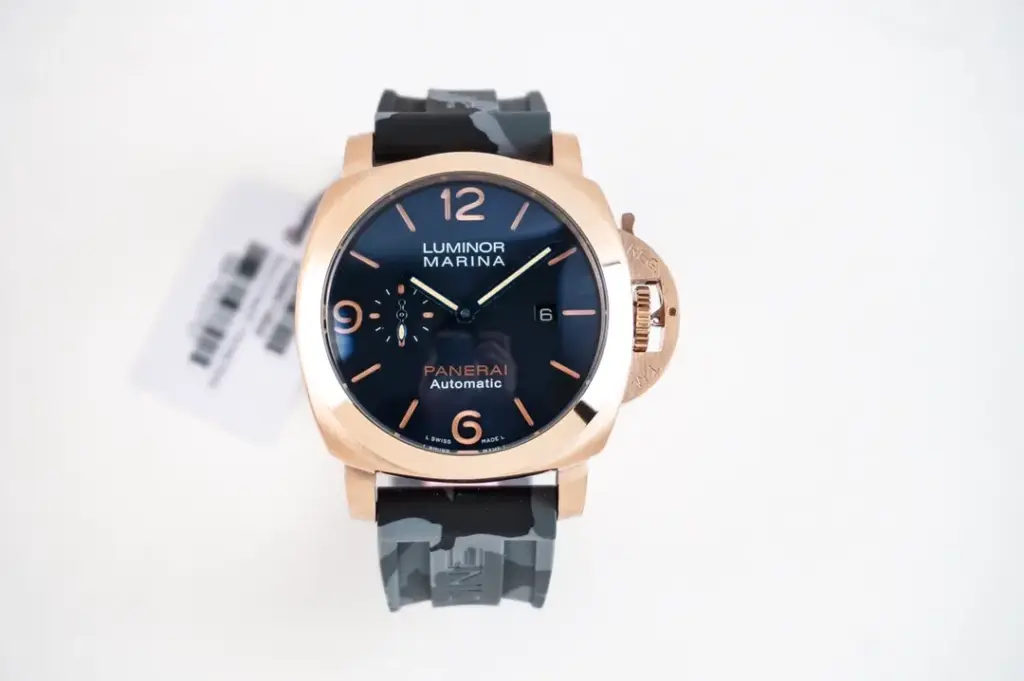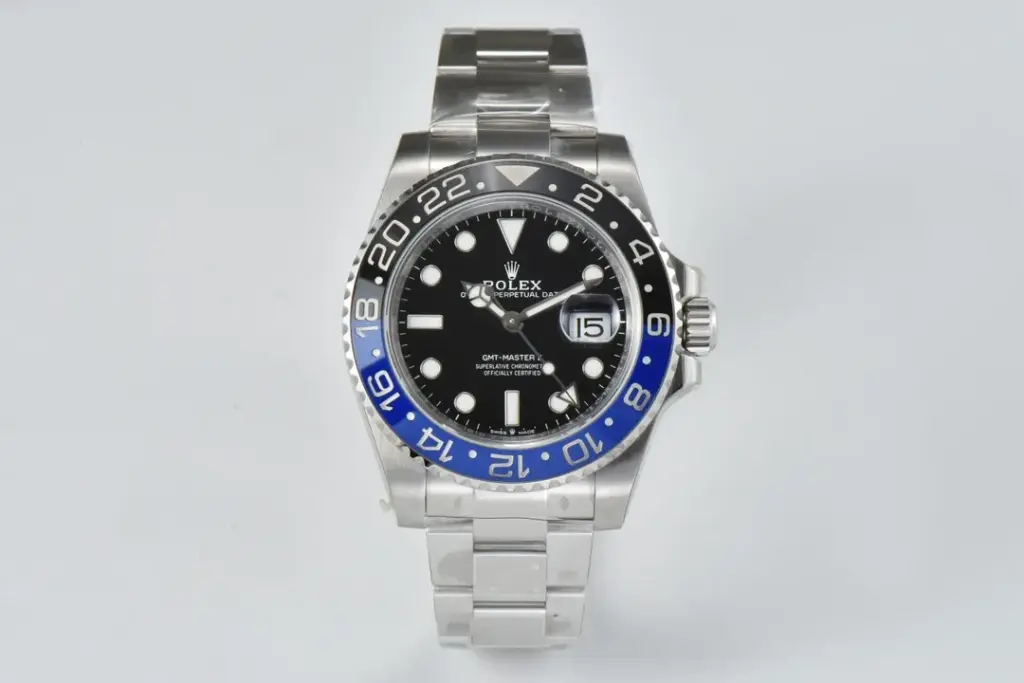
Rolex GMT-Master II bezel colors are useful visual clues, but they are not a complete product identity. A blue-and-black photograph, a familiar nickname and a reference-like number can point in the same direction, or conflict with one another. A good comparison checks all three rather than choosing whichever detail sounds most familiar.
This guide separates original-brand reference background from the actual records in our catalogue. It focuses on colour and identification, not promises about the movement fitted to a replica. Start with the design you enjoy, then establish exactly which listing you are considering and what its information supports.
Read colour and reference as separate clues
A bezel colour describes what you can compare visually. A reference identifies a particular original-brand configuration when it is used in the manufacturer's documentation. A nickname is informal shorthand. These are related clues, but they are not interchangeable pieces of evidence when reading imported product titles.
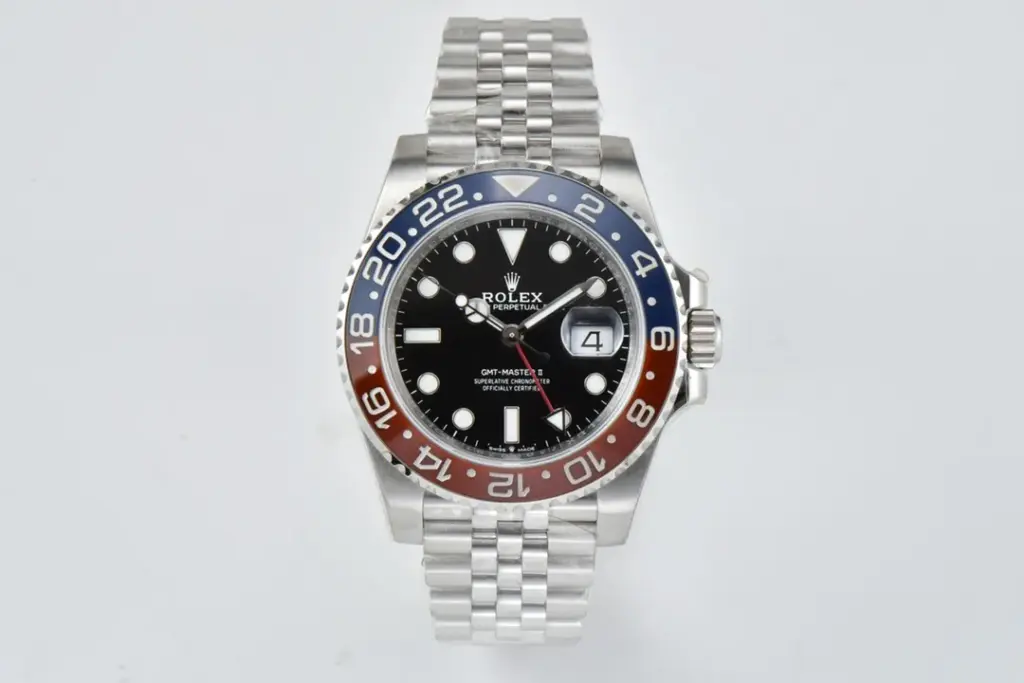
For original-brand background, Rolex describes reference 126710BLNR with a blue-and-black bezel and reference 126710GRNR with a grey-and-black bezel. Its historical material also connects 126710BLRO with red-and-blue. Those associations help you understand reference language. They do not verify the materials, dimensions or mechanism of a similarly named replica.
You can check the manufacturer's 126710BLNR page, 126710GRNR page and GMT reference contact sheet. These are background sources about genuine Rolex watches, not endorsements or specifications for this store's products.
A reference map for brand background
| Original-brand identifier | Colour association in Rolex's source | How to use that information here |
|---|---|---|
| 126710BLNR | Blue and black | Check whether the listing title and gallery agree |
| 126710BLRO | Red and blue | Match the complete identifier, not only a nickname |
| 126710GRNR | Grey and black | Do not substitute it for a different number in a title |
Notice what the table leaves out: replica movement specifications, exact colour tolerances and a declaration that every watch using one of these strings is equivalent. None of those conclusions follows from a reference map. The table is a reading aid, not a certification table.
When comparing colours, look at several photographs. White balance can make a dark blue area look almost black, while a bright reflection can make grey appear lighter. Begin with the full bezel and then look at its boundary between colours. Compare the relationship to the dial and bracelet rather than judging an isolated patch in an enlarged image.
Different photographs may also show the watch in different positions. Rotate your attention around the whole bezel before deciding that a colour occupies a different segment. If the available images cannot resolve a question, request a clearer view of the exact SKU. An assumed nickname should not fill the gap.
What the current listings actually say
The GMT collection provides the commercial starting point. Two records checked for this article have internally consistent title wording for the comparisons below. The description of a title is deliberately narrower than a claim that we have independently tested the physical watch.
| Catalogue record | Text present in its title | Recorded factory tag |
|---|---|---|
| SKU 35-719755 | 126710BLNR; Blue Black bezel | VS Factory |
| SKU 35-719757 | 126710BLRO; Red Blue bezel | VS Factory |
The blue-and-black listing and red-and-blue listing each have their own photographs and SKU. Their shared factory tag does not establish identical internal components, adjustment behaviour or measured performance. Compare the information given for each product instead of turning the tag into an unwritten specification.
There are also inconsistencies worth recognising rather than silently correcting. Another current title, SKU 35-719761, combines Batman wording with Black/White bezel wording. That is a reason to ask for clarification, not a reason for this article to rename the product or assert which part of the title is correct. The original record remains unchanged.
Be equally careful with truncated words in imported names. A trailing fragment is not a dependable bracelet description. If you care about a particular link pattern or clasp, use the gallery and a specific question to establish what the listing supplies.
Build a shortlist without guessing the mechanism
Start with two colour directions, then save their complete URLs and SKUs. Note the reference text exactly as it appears. Put uncertainties in a separate column so that a colour preference does not become an accidental assumption about materials or movement.
Consider what you need the watch to do. If independent time-zone adjustment is important, ask how the actual controls and hands operate on that SKU. An additional hand and a graduated bezel in a photograph do not establish the adjustment architecture of a replica movement. Do not use the operating sequence of a genuine Rolex as instructions for a watch whose mechanism has not been confirmed.
Factory browsing can narrow the candidate set. The VS Factory tag is appropriate for the two examples above because their current assignments include it. It should not be added mentally to unrelated listings simply because the store's name contains VSF. Brand, collection, factory tag and seller identity answer different questions.
If the colour choices still feel too close, step back to the Rolex range and compare the overall design direction. A simpler bezel or dial may suit your preferences better. The point of a reference guide is to help you make a clearer choice, not to make every familiar nickname sound like a required addition to a collection.
FAQ
Is a nickname enough to identify the watch?
No. Save the SKU and complete reference wording. Nicknames are convenient search terms, but the inconsistent title noted above shows why they cannot replace a careful record check.
Does blue-and-black automatically mean 126710BLNR?
It is an original-brand association used in this guide, not proof of the identity of every replica photograph. Check the actual title, images and information together before applying that label.
Can I infer the movement from a GMT-Master II title?
No. Ask about the mechanism and functions of the exact listing. Visual resemblance and reference text do not establish genuine-brand movement specifications or adjustment instructions.
Why are there no accuracy or reserve figures here?
The inspected identifiers and photographs do not establish those measured results. Giving a number without record-specific support would make this guide less useful, not more precise.
Related reading
Continue with how factory labels should be read if you want to filter a shortlist. The Submariner Date versus No-Date comparison explores another design decision without treating appearance as technical proof. Keep your evidence together using the existing product-listing checklist.