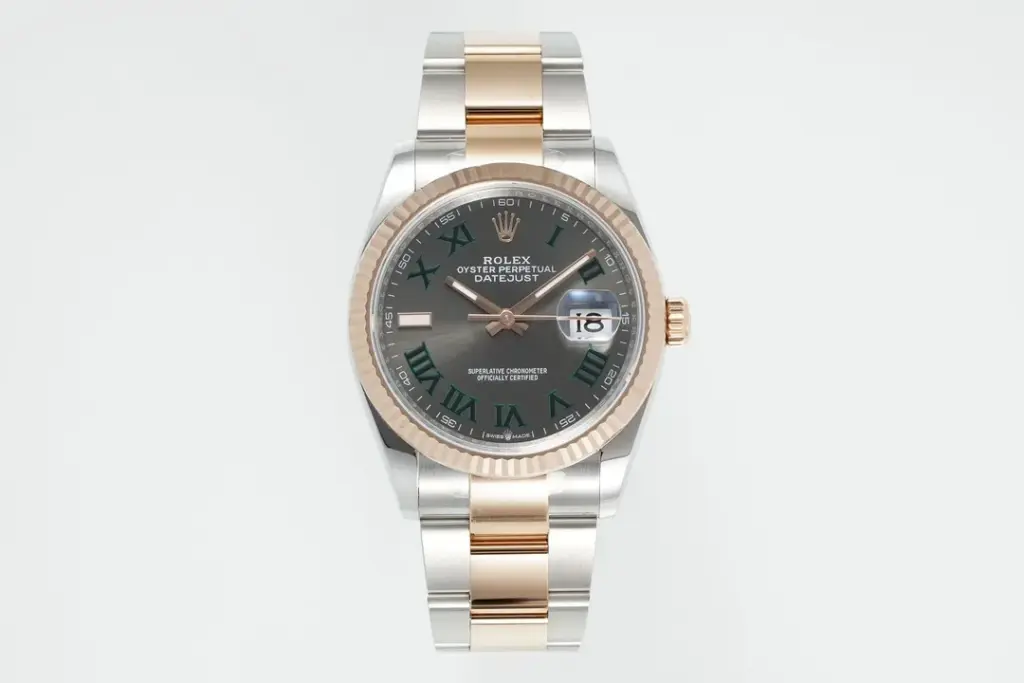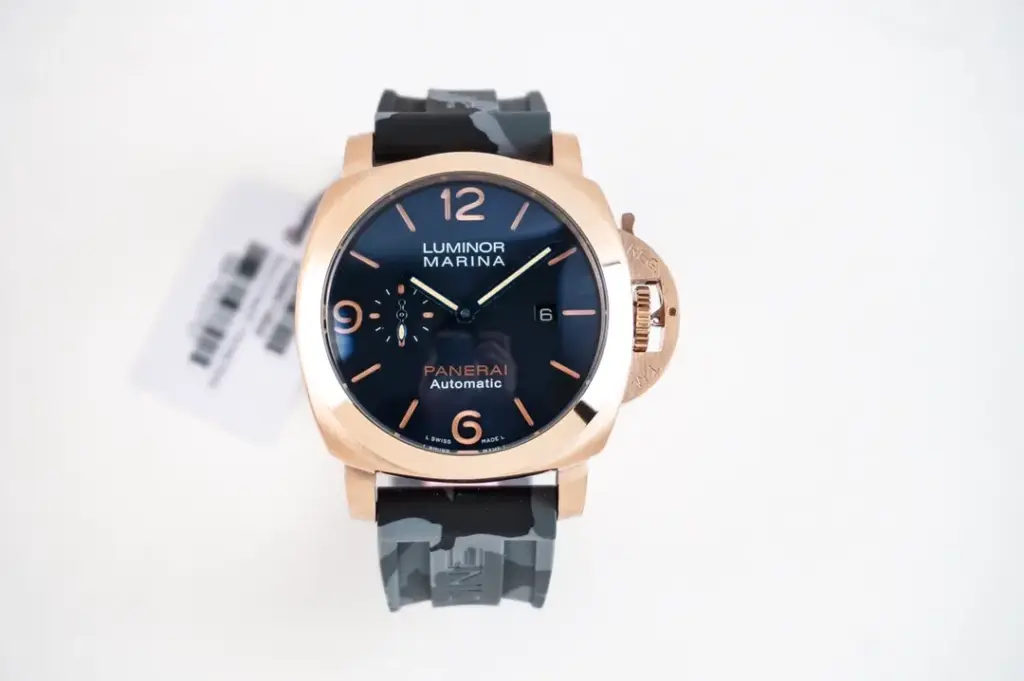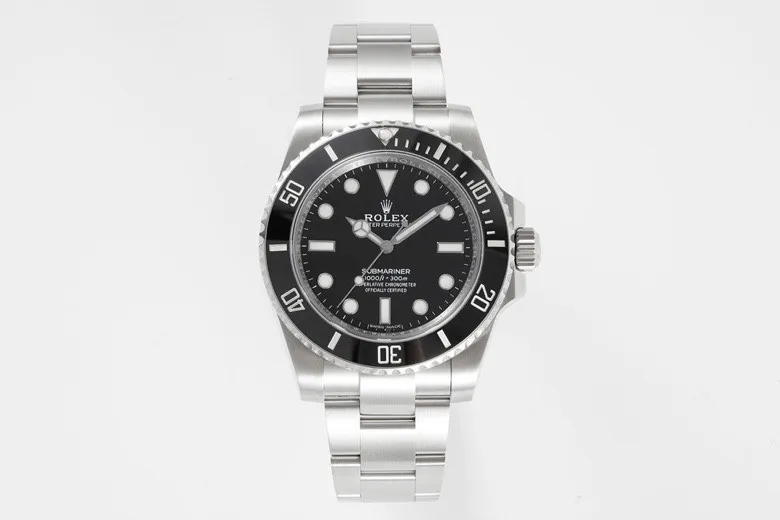
Rolex Submariner Date vs No Date is primarily a choice about how you want to read the dial. Do you use a calendar window throughout the day, or prefer an uninterrupted arrangement of markers? That question is more useful than asking which version is universally better. It also needs to be kept separate from the movement, dimensions and construction of a particular replica listing.
This guide compares the decision itself, then checks two actual catalogue records. The examples are not a matched technical test: they have different factory labels and different information available. Use them to build a shortlist, not to infer specifications that have not been recorded.
The date decision starts with the dial
In Rolex's own range, Submariner Date denotes the version with a calendar display, while the Submariner without that designation provides the no-date alternative. The date version also has a magnifying lens over its date window. That is general brand background, supported by the official Submariner Date guide; it is not a specification sheet for the replicas in this shop.
For your visual comparison, cover the date area in a photograph and look again at the relationship between the hands, markers and dial opening. Some people find the calendar convenient and visually reassuring. Others prefer the uninterrupted arrangement. Neither preference establishes better workmanship. The appropriate question is which layout you will enjoy seeing repeatedly, in normal light rather than only in enlarged photographs.
Think about your routine. If you regularly check the date while filling out forms or planning appointments, a calendar display may have practical value. If another device already provides that information, the display may matter more as a design choice. There is no reason to turn either habit into a rule for everyone else.
Compare the two catalogue examples
The Submariner collection contains both kinds of wording. At the catalogue check, SKU 35-719902 explicitly included No Date, 40mm and 114060 in its product title. SKU 35-720052 included Date and 116610LN. Those are recorded identifiers and claims in the listings, not independent measurements or authentication of an original Rolex reference.
| Recorded item | No-Date example | Date example |
|---|---|---|
| Product SKU | 35-719902 | 35-720052 |
| Date wording in title | No Date | Date |
| Identifier in title | 114060 | 116610LN |
| Size stated in title | 40mm | Not stated |
| Factory taxonomy label | VS Factory | AR Factory |
| What this comparison cannot establish | Measured dimensions or tested performance | Measured dimensions or tested performance |
Open the No-Date example and the Date example separately. Keeping their SKUs beside your notes prevents a detail from one page being accidentally transferred to the other. The missing size entry in the Date column is intentional: a familiar reference number is not a substitute for a recorded measurement.
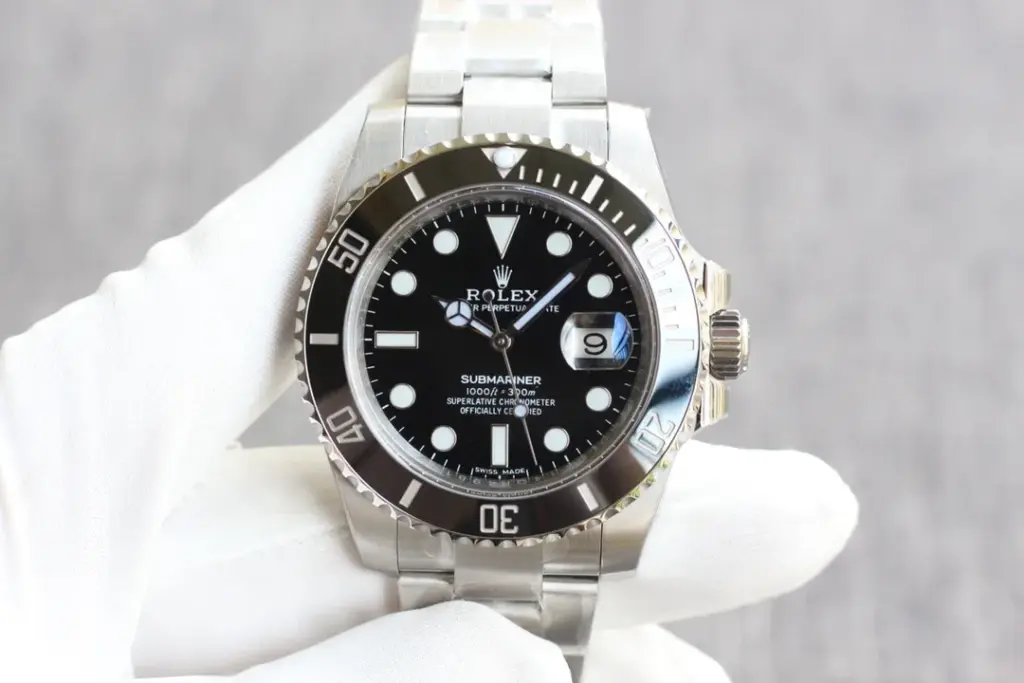
The two factory labels also mean this is not a controlled comparison in which only the date display changes. If one example appeals more, establish its own movement information, case measurements and operating guidance. A title containing a known model identifier cannot establish that every component corresponds to an original manufacturer's watch.
Choose for your routine, not a ranking
Begin with your most frequent use. Ask whether you actually look for a calendar on your wrist, whether you prefer a quieter dial, and whether a date magnifier changes the balance in a way you like. These are questions you can answer without pretending to have tested either watch.
Next, compare photographs at approximately the same displayed scale. A close crop can make one case look larger or make one dial appear sharper. Include a whole-watch photograph and a side view when they are available. Differences in lighting, camera distance and bracelet position can otherwise dominate your impression of the date layout.
Avoid the shortcut that no-date necessarily means thinner, simpler to service or more accurate. The display choice alone does not establish the movement fitted to a replica. Likewise, a Date title does not explain how its calendar should be adjusted. Obtain the instructions for the actual mechanism rather than applying an original-brand manual to an unknown replica movement.
If both layouts still appeal, consider them alongside the wider Rolex catalogue. This is a design comparison, not an argument that you must choose a particular brand family. A smaller shortlist with clearly identified records is easier to assess than a long list built from nicknames and broad quality claims.
Questions to settle before ordering
Write one short message for each SKU: confirm the displayed date arrangement, ask for any missing dimensions, and identify which operating instructions apply. If a photograph and title disagree, resolve that disagreement before treating the page as a reliable basis for selection.
A factory filter can be useful after that. The VS Factory-tagged catalogue groups existing assignments, but it does not include every Submariner or establish a common movement across them. In this comparison, only the No-Date example has that particular taxonomy label. Do not assume that the Date example belongs to the same factory because both appear in one collection.
Keep performance questions distinct from appearance. Neither a diving-style case nor dial markings establish the tested water resistance of a replica. Photographs cannot certify accuracy or power reserve either. If those points affect your decision, ask for information about the particular watch rather than adopting figures from an original-brand reference or another customer's example.
FAQ
Is No Date the same as an older or smaller Submariner?
No. It describes a display choice, not a universal size or production period. Our cited No-Date title states 40mm, but that number belongs to that listing. It should not become a rule for every no-date watch.
Does the Date version always have a different movement?
The two listings cannot answer that comparison. Their recorded factory labels differ and the date display alone does not identify their mechanisms. Request movement information for each SKU if this distinction matters to you.
Which one looks more balanced?
Balance is a preference. Compare the date area, markers and hands in ordinary viewing conditions. A layout that seems striking in a close-up may feel different at a normal wrist-viewing distance.
Can I use this guide to decide whether a watch is safe for swimming?
No. Date versus no-date is not evidence of pressure testing. Establish the condition and appropriate guidance for the individual watch before any water exposure.
Related reading
Use the factory-label guide to keep catalogue labels separate from verified specifications. If bezel colours and time-zone styling interest you more than the date layout, continue with the GMT-Master II reference guide. Our existing listing comparison checklist provides a place to organise the SKUs, photographs and unanswered questions.